

Laurentine Perilhou
Macrame artist
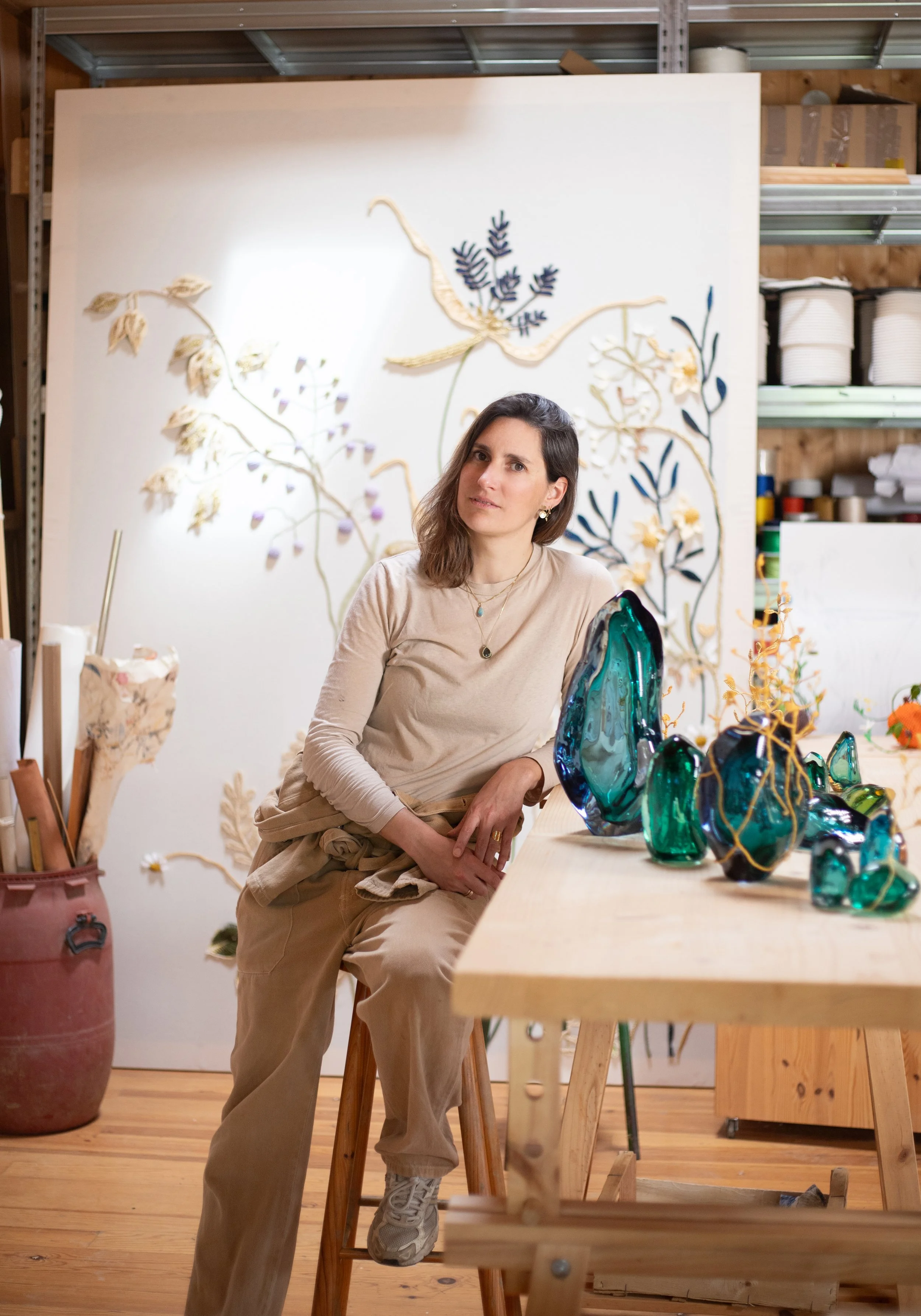
Laurentine Perilhou is a French artist and textile artisan whose practice transforms the ancestral technique of macrame into a contemporary sculptural language. Originally from Ariege, she holds a Bachelor’s degree in Art History, a foundation that continues to shape her understanding of form, composition, and material culture.
Her artistic journey began in Chile in 2008, where she learned the fundamentals of macramé from an artisan. Shortly after, in 2009, she established her first studio and launched a high-end macramé jewelry brand. Her meticulous craftsmanship quickly drew the attention of the fashion world, leading to a first collaboration in 2012 with the Haute Couture house Jean Paul Gaultier.
In 2021, Laurentine expanded her practice to include collaborations with interior designers, bringing her sculptural textile work into architectural and spatial contexts. Since 2023, she has dedicated her studio to the creation of unique, large-scale works for art galleries and collectors, positioning her firmly within the field of contemporary craft and textile art.
Her work has received notable recognition, including support from the Banque Populaire Foundation and the Fondation d’Entreprise Hermès. In 2024, her pieces were exhibited internationally—at the prestigious Rossana Orlandi Gallery in Milan during Milan Design Week, and in Venice as part of the Homo Faber biennial, supported by the Michelangelo Foundation.
Today, Laurentine continues to develop a body of work that bridges traditional craft and contemporary expression, combining technical mastery with a profound sensitivity to material and form.

Craft
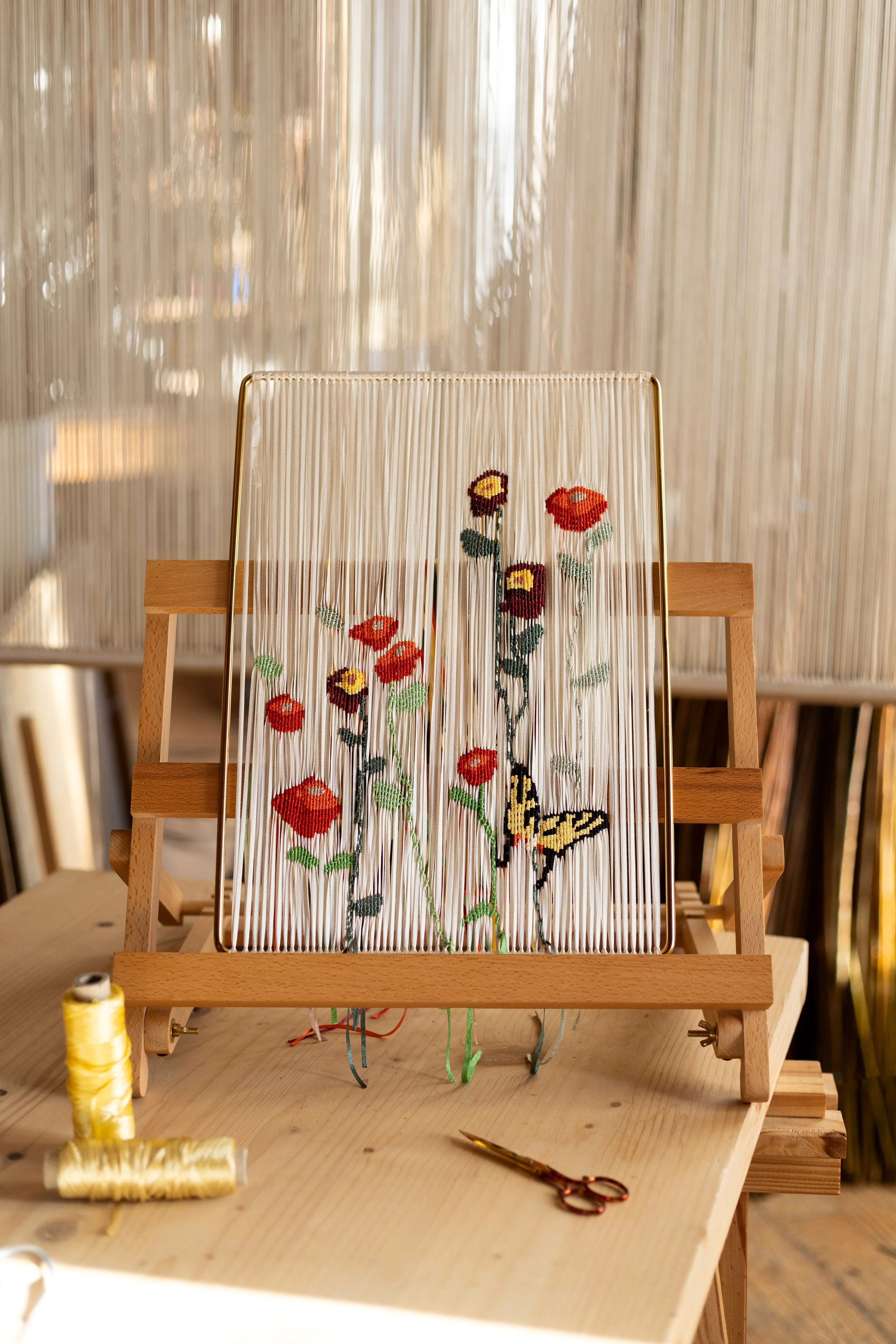
Laurentine’s practice is rooted in knotting techniques, and more specifically in macrame, an ancestral method based on the repetition of knots to create flat or three-dimensional surfaces. Her pieces are made entirely by hand, without tools, relying solely on precision, patience, and the physical rhythm of the gesture.
While her foundation is traditional, she has developed a distinctly contemporary approach. Laurentine reinterprets macramé not as ornamentation, but as a sculptural language, exploring the expressive and structural possibilities of the knot. This method allows her to move far beyond the conventional applications of macramé and into a territory where craft, textile art, and sculpture intersect.
Her work is distinguished by an exceptional level of meticulousness, attention to detail, and rigorous color research. The density of her knotting, the subtle variations in pattern, and the highly controlled chromatic choices give her pieces a signature that is both technically rare and immediately recognizable.
The creative process begins with observation—of plants, landscapes, textures, and small natural details often overlooked. These elements inform her initial sketches, which provide a general direction for each piece.
A significant part of her process involves researching colors and materials, ensuring that each choice supports the coherence and intention of the final work. The repetition of the gesture—the continuous act of knotting—is central to her philosophy. Because her technique cannot be mechanized, the passage of time becomes an integral part of the object itself.
Material
Materials play a central role in Laurentine Perilhou’s practice. Her work is built from a wide range of threads and fibers, selected for their flexibility, texture, and capacity to support the narrative and structural intentions of each piece.
Her material palette includes cotton, linen, hemp, lotus, bamboo, silk, and other natural fibers, as well as polyester, viscose, and tactel, which offer different densities, shines, and behaviors. She also incorporates metallic threads such as gold and silver, which add subtle highlights and structural tension within the work.
For Laurentine, material is not a neutral component but an active part of the piece’s storytelling. The thread influences volume, light, shadow, and texture, and must reinforce the intention of the work. Each material is chosen not only for its technical properties but for the way it contributes to the emotional and visual presence of the finished piece. In this sense, the material becomes an extension of the gesture and the narrative itself.
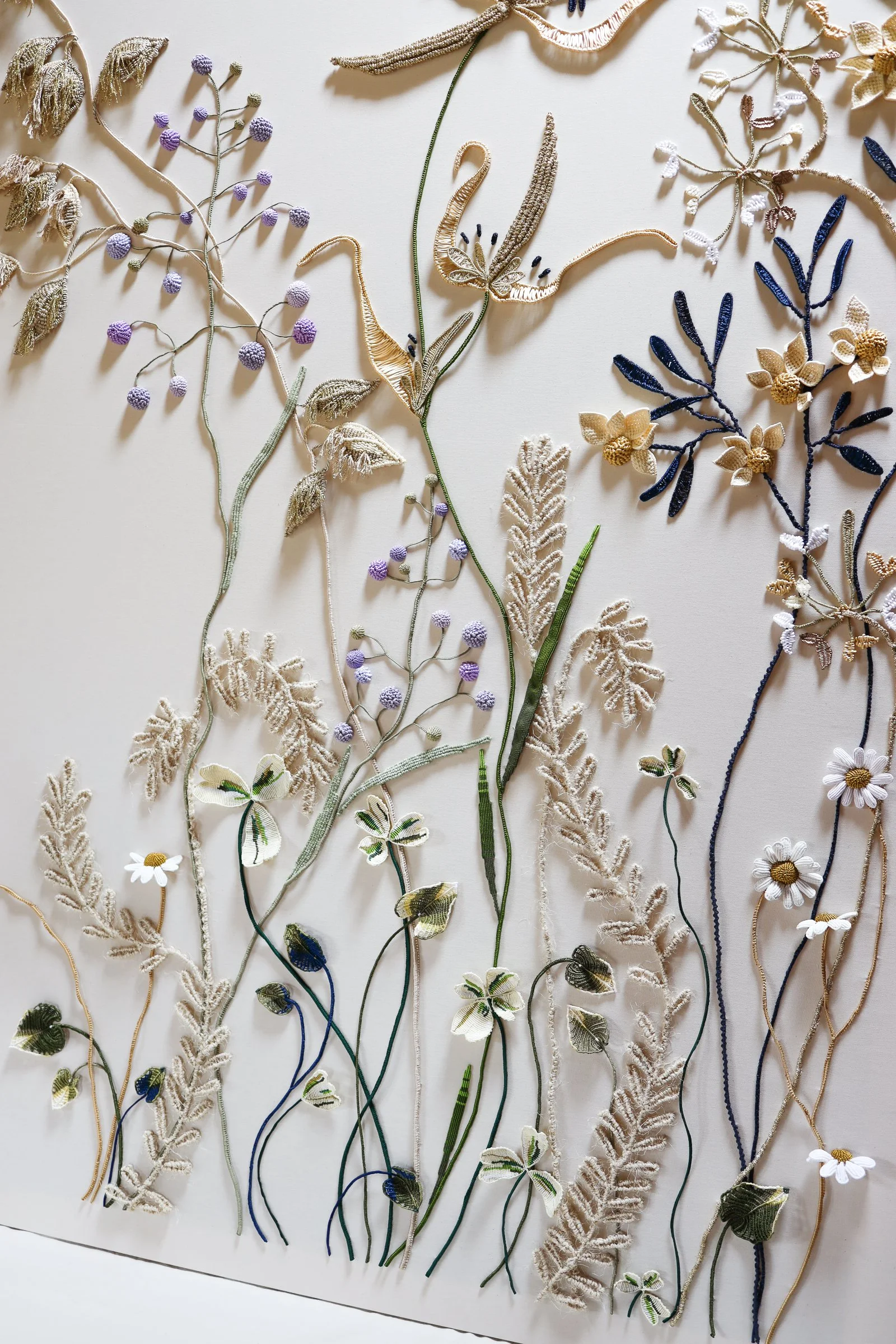
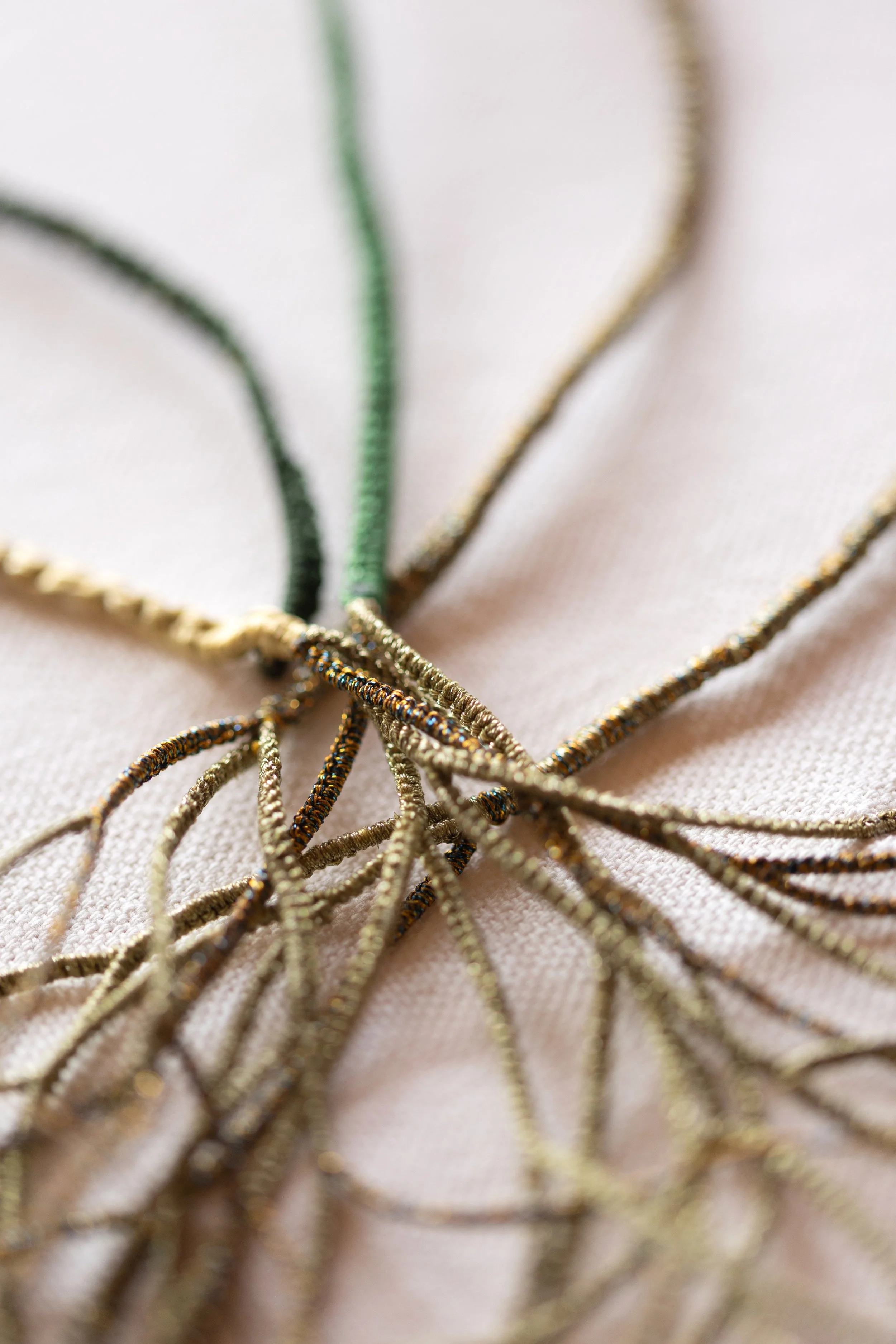
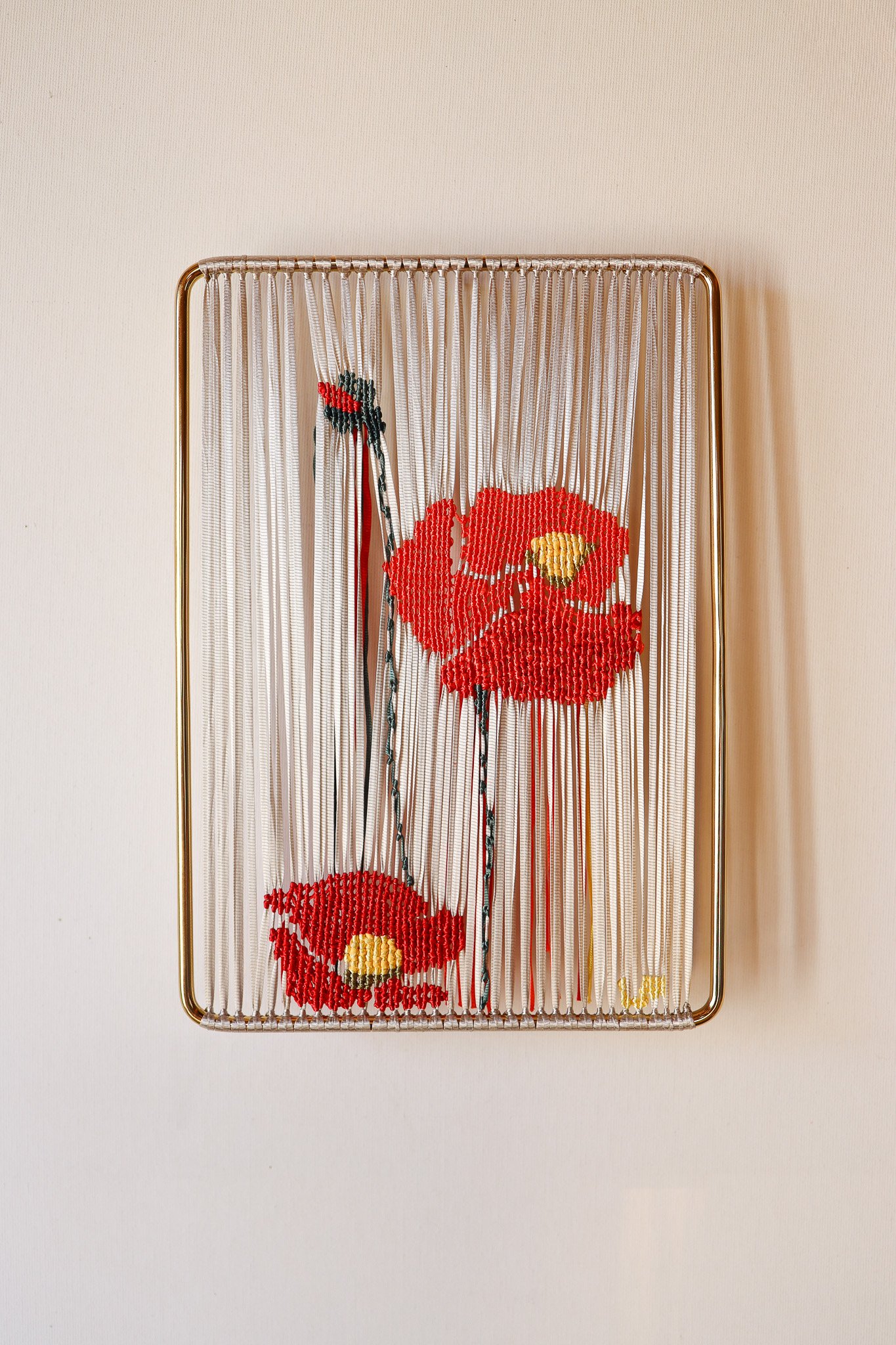
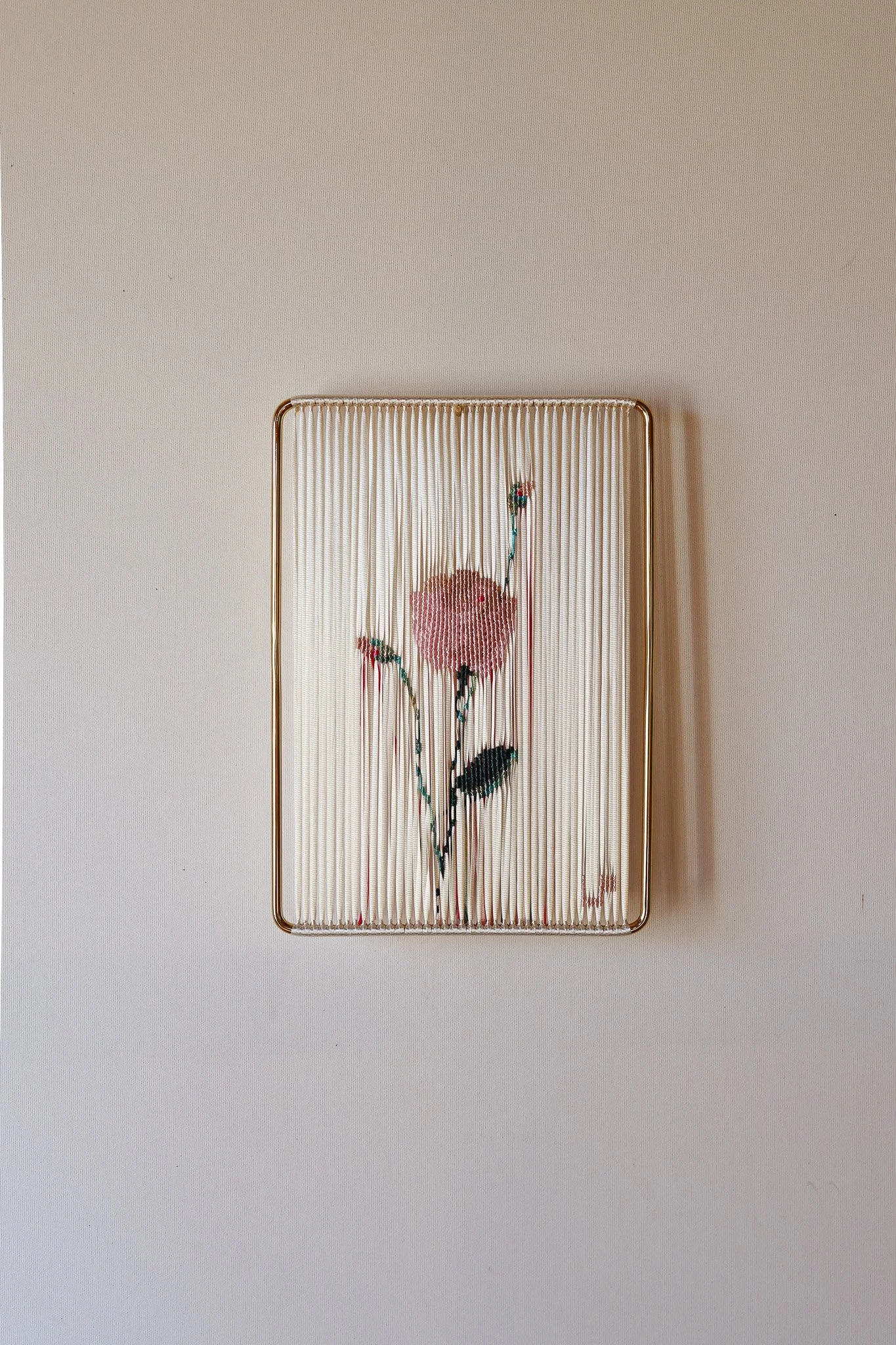
Blown glass and lurex thread.
50 × 20 cm / 19.6 × 7.8 in
2026
SOLD - Commission Upon Request
Created by Laurentine Perilhou and Thibaut Nussbaumer in Ariege, France
Inquire
Laurentine Périlhou is a French artist and textile artisan who elevates the ancestral art of macramé into a contemporary sculptural language.
Rooted in knotting techniques—particularly macramé, where forms emerge from the quiet repetition of hand-tied knots—her practice bridges tradition and modernity with rare sensitivity.
With her singular vision, Laurentine transforms the humble knot into an intimate meditation on growth, resilience, and transformation. “Each knot is the symbol of a silent construction that translates the plant’s capacity to adapt to its environment and to shape the landscapes it inhabits.” — Laurentine Périlhou
Her pieces are not simply objects — they are contemplative experiences.